American Airlines Retires International First Class in Favor of Expanded Business Suites
The era of international first class on U.S. carriers ends as American Airlines replaces its traditional top tier with a massive business-class cabin featuring 70 suites.
By Ricardo Kovalenko ·
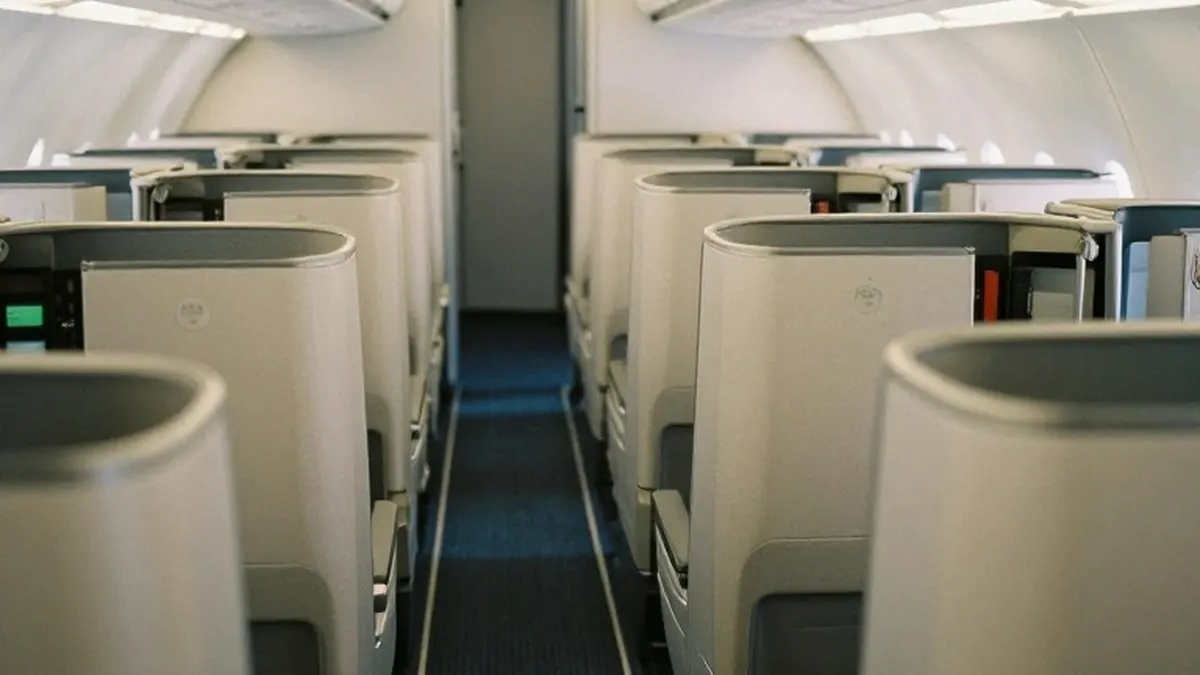
The long-standing tradition of international first class on U.S. airlines concluded this week with the departure of American Airlines' final flight featuring a dedicated first-class section. The last such flight left Sydney for Los Angeles on Friday morning. In place of the previous eight-suite first-class cabin, American is installing a significantly larger business-class section that accommodates 70 passengers. This move marks the end of American's status as the last major U.S. carrier to offer first class on long-haul international routes, following similar changes by Delta Air Lines and United Airlines.
The shift reflects a broader industry strategy to invest in what is often described as mass luxury. Airlines are upgrading business class with sliding-door suites, larger screens, improved bedding, and better technology. These enhancements aim to justify higher ticket prices, which help offset rising operational costs such as fuel and airport landing fees. For many travelers, the distinction between the old first class and the new business class is minimal, as both now offer lie-flat seats and premium amenities.
Henry Harteveldt, founder of Atmosphere Research Group and a former airline executive, noted that the comfort of modern business class is sufficient for most passengers. He pointed out that while early jet-age first class featured elaborate dining services like seat-side carving, today's travelers primarily value sleep and comfort. Harteveldt observed that passengers often stay awake to eat rather than sleep, making the enhanced business-class experience a practical choice for both airlines and consumers.
Financial considerations also drive the change. The price difference between first and business class has been substantial. For example, a recent one-way ticket from Los Angeles to London on American's Boeing 777-300ER cost $15,669 in first class compared to $12,994 in business class. Additionally, many corporate travel policies allow employees to book business class but restrict first class, making the larger business cabin more commercially viable.
American Airlines is currently remodeling its Boeing 777-300ER fleet to include these new 70-suite configurations. Previously, these aircraft had eight first-class suites and 52 business-class pods. The carrier is also operating a subfleet of 787-9 Dreamliners with 51 business-class suites. American is evaluating whether to increase the number of suites on its smaller 787-8 Dreamliners, which currently have 20, to improve yield on those aircraft.
Nat Pieper, American's chief commercial officer, explained that the goal is to make the seat cost competitive by increasing the number of high-yield seats. "You don't have enough seats to make the seat cost competitive," Pieper said in a recent interview. "So what you need to do to make that airplane work is it's got to be a yield play. You need more business-class seats."
Until the change, the differences between American's first and business classes were subtle. First-class passengers received additional items such as a soup, a warm dessert served with ice cream, and a memory foam lumbar pillow. Business class passengers did not receive these specific extras but still enjoyed premium food, early boarding, and lounge access. Both cabins offered lie-flat beds, though the first-class experience was slightly more lavish in its details.
American will continue to offer a separate lie-flat first class on its Airbus A321T subfleet for domestic cross-country flights until early 2027. After that, this domestic first class will also be discontinued. Meanwhile, the industry is seeing a rise in premium economy sections, which sit between business and standard economy, offering recliner seats, better meals, and larger screens.
Airlines are also segmenting business class into different tiers. United and Delta have announced that their most expensive cabins will be sold with basic options that are more restrictive, such as not including seat selection or lounge access. There are also premium seats within the business cabin, like American's Flagship Suite Preferred and United's Polaris Studio, which offer extra space. United CFO Mike Leskinen told CNBC that the airline is not done with these segmentation strategies, indicating further changes are on the horizon.
Although U.S. carriers are moving away from the first-class designation, the concept remains strong internationally. Airlines such as Singapore Airlines, Lufthansa, British Airways, and Air France have recently unveiled updated first-class cabins. British Airways is building a record-breaking 106-suite business class on its A380 aircraft while also upgrading its first class. Smaller U.S. carriers like JetBlue, Frontier, and Allegiant are introducing domestic or short-haul first-class seats, offering a more affordable version of the luxury experience.
More News · National news · Report a business · Got a Story?