Central Arizona Project faces 47% cut as 1960s engineers' warnings resurface
Records show canal architects predicted supply drops decades ago, but proposed fixes like cross-basin pipelines were never built.
By David Mokoena ·
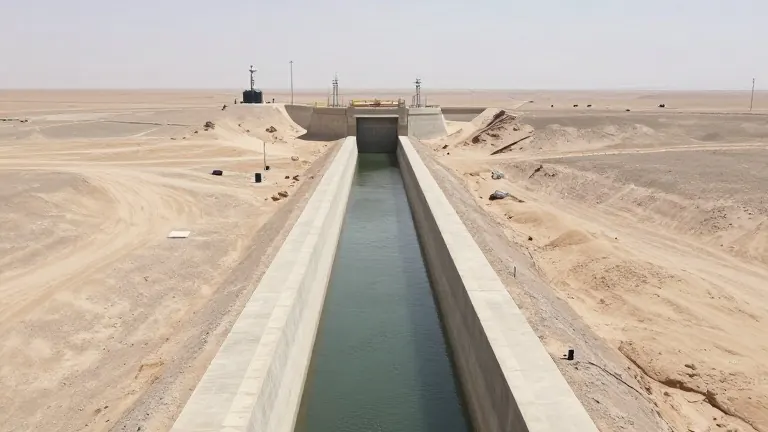
Arizona households and businesses may face a 47% reduction in water allocated from the Colorado River under a new federal plan. The proposal targets the Central Arizona Project, a 336-mile canal system that delivers water to the Phoenix and Tucson metropolitan areas. This potential cut follows legal challenges filed this fall by Arizona, Nevada, and the CAP itself against the federal government's reduction strategy.
The threat to the canal's flow is not new to the region's engineers. In the 1960s, Floyd Dominy, then commissioner of the Bureau of Reclamation, publicly forecast that the CAP's available water supplies would be more than halved between 1990 and 2030. Dominy attributed the decline to growing upstream usage in Colorado, New Mexico, Utah, and Wyoming. Although climate change emerged as the primary driver of 21st-century shortages, Dominy's prediction of lower flows proved broadly accurate.
Proponents of the project understood the canal needed backup sources. Congressman Mo Udall, a key sponsor, testified in 1968 that the system required augmentation from outside water supplies. He suggested a connection to the Columbia River in the Pacific Northwest or massive desalination plants on the Pacific Coast. Senators from the Northwest added a provision to the CAP legislation barring the federal government from studying cross-basin water transfers for ten years, a move that signaled how seriously the idea was taken at the time.
Those augmentation plans never materialized. Tom McCann, a former deputy general manager for the CAP, noted that no one was willing to spend money on a future problem that had not yet arrived. "The warning that had been issued before, if you want to think of it that way, was largely forgotten," McCann said. He added that cost and political hurdles prevented implementation, even as managers continued to study the options for decades.
Brad Udall, son of Mo Udall and a senior water research scientist at Colorado State University, believes the 1960s policymakers deserved some forgiveness. He argued that the post-World War II era fostered a belief that engineering could solve any crisis. "We could build our way out of anything," Udall said. "We're smart. We're rich. The world's our oyster." He noted that proponents were exhausted from a years-long legal battle with California and wanted to secure the canal's passage quickly.
Chuck Podolak, former director of the Water Infrastructure Finance Authority of Arizona, suggests the focus on large infrastructure allowed leaders to avoid addressing agricultural water use. Farms and ranches account for roughly three quarters of all Colorado River water consumption. Podolak believes promising expensive pipelines helped policymakers delay the difficult political decision of shifting water from cheap crops to high-value urban use.
The CAP continues to operate despite the looming cut. Rich Weissinger, a former director of field maintenance for the canal, described the system as an engineering marvel. He emphasized that the facility provides a stable source for industry and municipalities, a reliability now under pressure from record-low reservoir levels across the basin.
Source: WUSF Public Media