Central Arizona Project faces 47% water cut after decades of ignored warnings
Engineers in the 1960s predicted the canal system would need external water sources to survive, a plan that was largely abandoned as Arizona’s reservoirs hit record lows.
By David Mokoena ·
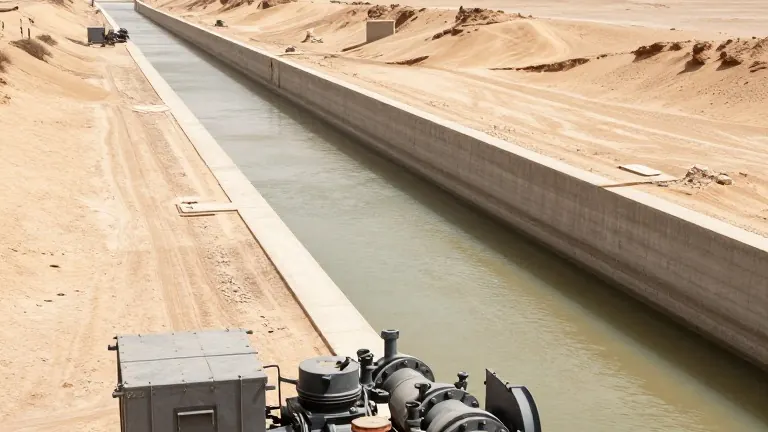
The 336-mile Central Arizona Project canal system is facing a potential 47% reduction in its annual water allocation. This proposed cut stems from a new federal plan to reduce water use across the seven states that rely on the Colorado River. The plan triggered legal action from Nevada, Arizona, and the canal system that serves the Phoenix area.
Rich Weissinger, who spent nearly 30 years with the organization operating the canal, described the system as an engineering marvel. He stood inside a pumping plant where motors and turbines created a steady, thundering whir. Massive casings of riveted metal housed the moving parts. Weissinger noted that many people, industries, and municipalities depend on the stable water source the project provides.
The current crisis did not arrive without notice. In the 1960s, architects of the project warned that its position in the queue for water would lead to lower flows in the 21st century. They proposed adding outside water supplies, a process known as augmentation, to the river water flowing through the canal. Suggestions included connecting the Colorado River system to the Columbia River system in the Pacific Northwest or building desalination facilities on the Pacific Coast.
Floyd Dominy, then commissioner of the Bureau of Reclamation, forecasted that water available for the project would be more than halved between 1990 and 2030. He attributed the decline to growing use in upstream states like Colorado, New Mexico, Utah, and Wyoming. Congressman Mo Udall, a Democrat from Arizona, testified in 1968 that additional water was necessary. He stated, "Let's assume there is no augmentation in the river, not a drop," calling it a violent assumption.
The idea of augmentation felt certain at the time. Senators from the Pacific Northwest added language to the legislation authorizing the project to protect the Columbia River. This language barred the federal government from studying a plan to move water into the Colorado River from other systems for ten years after the law passed. Despite this, the promised external water supplies never arrived.
Tom McCann, a former deputy general manager for the project, said there was no willingness to spend money on a future problem that had not yet arrived. He noted that cost and political hurdles prevented the implementation of these ideas. Brad Udall, son of Mo Udall and nephew of Stewart Udall, agreed that his father and uncle could have done better. He said, "The 1968 idea was we could build our way out of anything. We could engineer our way out of every crisis."
Udall, now a senior water and climate research scientist at Colorado State University, suggested the proposals were a way to avoid saying Phoenix would grow at the expense of agriculture. Farms and ranches account for roughly three quarters of all Colorado River water use. Chuck Podolak, former director of the Water Infrastructure Finance Authority of Arizona, argued that promising augmentation allowed policymakers to ignore the difficult political reality of urban growth. The new federal plan now forces a decision on how to manage demand as reservoirs shrink to record lows.
Source: WUFT