China leverages APEC summit to strengthen ties with US and Russia
Chinese President Xi Jinping hosted a historic trilateral meeting with US and Russian leaders in Shenzhen, signaling Beijing's growing role in global diplomacy.
By Leila Saeed ·
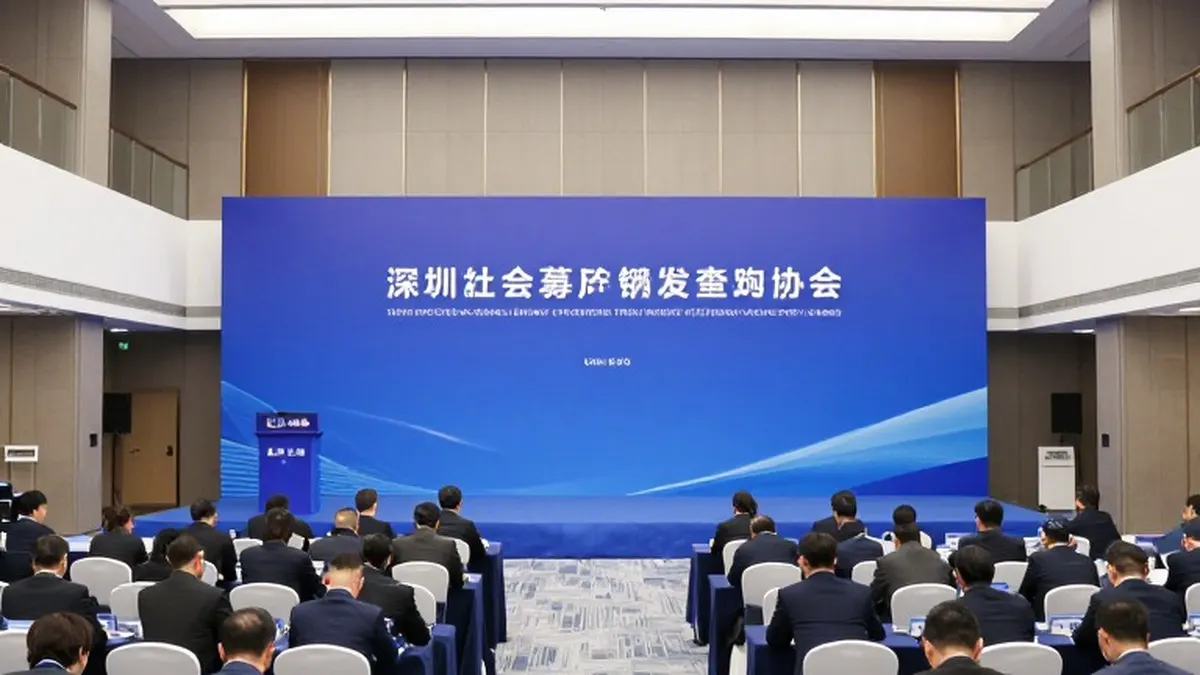
Chinese President Xi Jinping has once again brought together major world leaders on mainland soil, hosting a significant diplomatic gathering in Shenzhen. This marks the second consecutive year that Xi has convened Russian President Vladimir Putin with another prominent global figure. The current summit, centered around the Asia-Pacific Economic Cooperation (APEC) meetings, has become a focal point for multilateral engagement.
The centerpiece of this week's events was a trilateral meeting on Thursday between Xi, Putin, and U.S. President Donald Trump. This was the first time the three leaders had met in person. The encounter followed a welcome banquet held the previous evening for the APEC Economic Leaders' Meeting. The gathering highlights a shift in diplomatic dynamics, with China positioning itself as a central venue for high-level international discourse.
This diplomatic strategy builds on previous efforts to ease regional tensions. In September 2025, Xi, Putin, and Indian Prime Minister Narendra Modi posed together for a joint photograph during an annual meeting of the Shanghai Cooperation Organization in Tianjin. That event followed a period of reduced friction between Beijing and New Delhi, illustrating China's capacity to foster goodwill among diverse powers.
Experts suggest that China's ability to engage directly with these major powers underscores its expanding influence across Eurasia and the Global South. Jodie Wen, a postdoctoral fellow at Tsinghua University's Center for International Security and Strategy, noted that Beijing aims to play a more constructive role in a world often characterized by conflict and instability. She added that China intends to offer more domestic platforms for nations to discuss pressing global issues in the future.
China has increasingly adopted the role of a diplomatic broker in recent years. A notable example occurred in 2023, when Beijing provided the forum for restoring diplomatic relations between Saudi Arabia and Iran. By participating in and hosting various multilateral organizations, China has managed to maintain its presence in Western diplomatic circles while simultaneously deepening relationships with non-Western nations.
The volume of diplomatic activity hosted by Xi is substantial. According to CNBC analysis of official Chinese readouts, Xi has hosted more than 40 heads of state this year. This includes at least eight leaders who gathered around the APEC meetings in Shenzhen this week. These figures are in addition to the over 60 state visits received by China in 2025, reflecting a sustained effort to maximize bilateral and multilateral interactions.
Yue Su, principal economist for China at the Economist Intelligence Unit, explained that Beijing views these multilateral platforms as opportunities to expand its international influence and demonstrate a commitment to multilateralism. However, she emphasized that bilateral diplomacy remains equally important. She noted that as different countries pursue varying geopolitical and economic priorities, reaching consensus through multilateral bodies has become more difficult.
In this context, China's diplomatic priorities are shifting toward delivering tangible economic benefits. These benefits are expected to come through enhanced trade, investment, financial connectivity, and technology cooperation. On Thursday, Xi announced that China would provide 20 million dollars in support for the Asia Pacific region during the APEC Economic Leaders' Meeting. He also advocated for the development of an Asia-Pacific community with a shared future, extending his broader slogan regarding a shared future for humanity.
The in-person nature of these meetings is viewed as critical for crisis management. Wen stated that the Shenzhen summit can create meaningful outcomes and provide diplomatic space for future negotiations. She argued that face-to-face interactions are essential for avoiding misunderstandings and preventing further tensions among major powers.
During the trilateral meeting, Trump stated that the U.S., China, and Russia are uniquely positioned to discuss the reduction of nuclear weapons. A subsequent Chinese readout indicated that the three leaders also discussed key geopolitical issues, including the situations in Ukraine, the Middle East, and the Korean Peninsula. These discussions underscore the complex and multifaceted nature of current global diplomacy.
More News · National news · Report a business · Got a Story?