
Detroit automakers face $2 billion cost spike
General Motors and Ford forecast billions in extra expenses from tariffs, diesel, and computer chips while EV sales flatten.
By David Mokoena ·
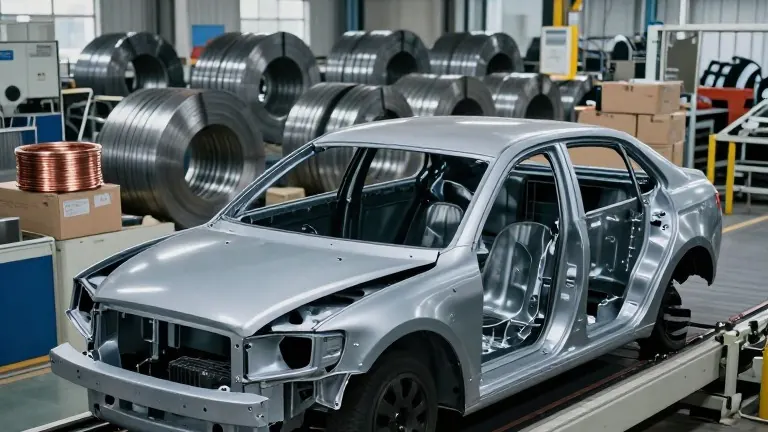
General Motors and Ford expect material costs to add roughly $2 billion to their expenses this year. The automakers cited rising prices for steel, copper, and computer memory chips as primary drivers. These figures were disclosed in earnings calls held this week for the third quarter.
General Motors Chief Financial Officer Paul Jacobson stated that the company is also paying approximately $2.5 billion in tariff costs. He noted that this amount is lower than earlier forecasts, a result of receiving tariff refunds. Ford Chief Executive Officer Jim Farley said commodities and logistics costs represent a similar year-over-year headwind of about $2 billion for his company.
Despite rising input costs, revenue for the Detroit automakers increased. General Motors reported a 2.9% rise in revenue compared to the same period last year. Ford saw a 2% increase, while Stellantis reported a 1% gain. Sales of light-duty trucks led the performance, with General Motors reporting a 9% jump and Stellantis seeing a 34% increase in U.S. pickup sales.
The high prices for raw materials stem from a combination of trade policy and global demand. The Trump administration has imposed additional tariffs on imported steel, aluminum, and copper since 2025. Copper costs have risen due to tariffs and increased demand for electric vehicle batteries and data center wiring. Computer memory chip prices have also climbed because of a tight supply chain and heavy demand from the artificial intelligence sector.
Logistics expenses are adding to the financial pressure. Diesel prices have hovered near $6.35 per gallon, approaching the all-time high set in September. High fuel costs increase the expense of transporting parts across the U.S.-Canada border, where supply chains are deeply intertwined. Ford Chief Financial Officer Sherry Ann House said higher fuel prices are impacting freight and energy costs, though customer demand for trucks remains strong.
The electric vehicle market has cooled since the federal tax credit expired. The $7,500 credit ended on September 30, 2025, following the passage of the One Big Beautiful Bill Act. Data from Edmunds and Cox Automotive shows national EV sales dropped after the credit's removal. General Motors attributed a 6% decline in its third-quarter sales partly to this smaller EV market.
Hybrid vehicles are gaining traction as an alternative. Sales of hybrids rose 27% in the past year according to Edmunds. American shoppers are showing greater interest in these models due to high fuel prices. Mike Wall, an analyst at Mobility Global, said automakers are adjusting product plans to include more hybrids, though gas-powered cars still drive most profits for the major companies.
Tesla has regained its lead in the U.S. electric vehicle market. The company now accounts for almost 52% of new EV sales, a share it lost in 2024 and 2025. Ivan Drury, director of industry insights at Edmunds, noted that buyers are defaulting to Tesla as other manufacturers pull back their investments. Tesla reported that its global sales fell during the quarter compared to the previous year, but its market share has grown.
Elon Musk, Tesla's chief executive, focused on new technologies rather than car sales during the earnings call. He highlighted investments in robotaxis and humanoid robots, noting that capital expenditures are nearly double what they were a year ago. Musk also hinted at a potential merger between Tesla and SpaceX, saying special committees at both companies are discussing the possibility. He told investors that shareholders would need to support such a move.
The industry faces a structural challenge in balancing its transition to electric vehicles with current demand. Sam Fiorani, a vice president at Auto Forecast Solutions, described the auto industry as moving at a glacial pace between vehicle generations. He said the slower-than-anticipated shift to fully electric vehicles has forced manufacturers to backtrack and develop new internal combustion engines. Fiorani expects the Detroit Three to offer more hybrid vehicles in the coming years.
Source: WLRN
More Business · Business Complaints · Report a business · Got a Story?