France Detains Record Number of Student Protesters
With 70,000 officers deployed and over 11,000 detainees, the government faces criticism for its heavy-handed response to a crisis rooted in school infrastructure and spending cuts.
By David Mokoena ·
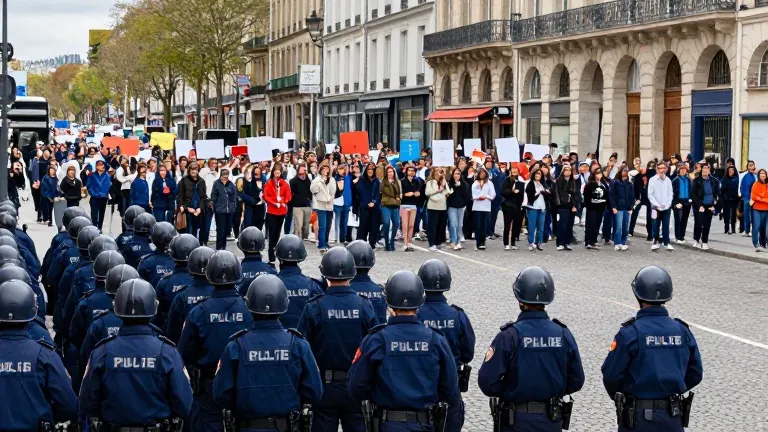
French authorities have detained more than 11,000 people since student protests began in September, as the government deployed 70,000 police officers to manage the unrest.
The escalation in law enforcement presence marks one of the most heavily policed protest movements in recent decades. The movement initially sparked by deteriorating conditions in schools and universities has drawn attention to widespread issues in the French education system.
Protests began in early September, with some of the earliest actions occurring on August 31 in Acoua on the island of Mayotte. Parents and staff blockaded the Cite du Nord secondary school, which houses 2,300 students in facilities built for 900. The school suffered from cramped classrooms, poor ventilation, water supply failures, and unsanitary toilets.
Similar complaints emerged in the Paris region. At Blaise-Cendrars secondary school in Sevran, students and teachers reported water leaks, mold, and unusable toilets as early as 2024. In Pantin, windows at Marcelin-Berthelot secondary school no longer opened, a critical issue during heatwaves where temperatures can reach 40C. In Bagnolet, staff at Politzer secondary school learned in late September that the water was unsafe to drink, despite testing in June.
These infrastructure failures coincide with a decline in educational resources. The education ministry reported that 20.2 million teaching hours were not delivered in state secondary schools during the 2024-25 academic year, excluding Mayotte. Fifteen million of those missing hours were attributed to absent teachers who were not replaced. Economist Lucas Chancel noted that government spending per student has fallen by 20 percent since 2017.
Police response to the demonstrations has been marked by a high volume of arrests and injuries. By October 14, 7,950 people were in police custody, with 85 percent of them minors. An additional 2,700 were detained following protests on October 17, and police made another 1,000 arrests on October 25.
Injuries among young protesters have included a fractured jaw and broken teeth for a 14-year-old named Eden, who was hit by a tear gas grenade. A 16-year-old named Mael lost sight in one eye from a suspected rubber bullet impact, and a 15-year-old named Evan lost a hand to a stun grenade.
President Emmanuel Macron addressed the public, stating he understood the students but pledged to ban future protests. He accused the far left of trying to bring down the republic. In a meeting with 20 students on Friday, his administration promised to reform the university entrance platform but did not address the group's primary demands regarding school conditions.
Prime Minister Sebastien Lecornu has urged the political left to choose a side, framing the conflict as a choice between the republic and rioters. The government has also highlighted rising poverty, with 9.8 million people living below the official poverty line, the highest rate since the 1990s.
The government maintains that the security response is necessary to restore order, while critics argue it obscures the underlying socioeconomic factors driving the mobilization. The next scheduled action involves continued police deployment and a review of the university entrance reform promised by the president.
Source: Al Jazeera