Jury finds driver guilty in 2025 Palisades Fire that killed 12 and destroyed 6,800 structures
A Los Angeles County court ruled that Jonathan Rinderknecht started the Lachman Fire, which ignited the massive wildfire that ravaged Pacific Palisades, Malibu, and the Santa Monica Mountains.
By Ricardo Kovalenko ·
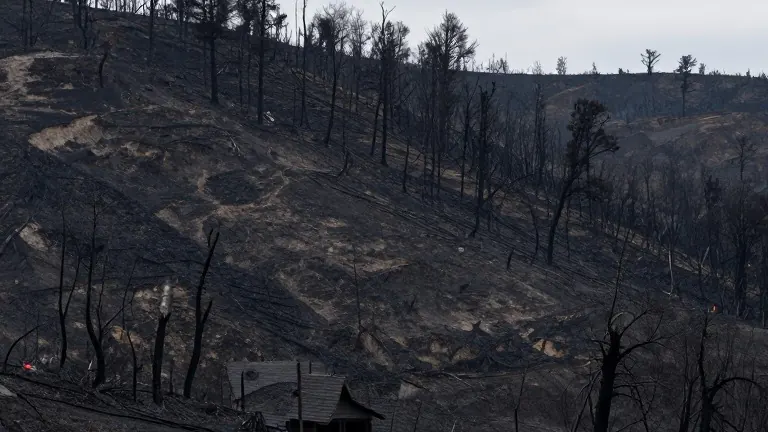
The Palisades Fire of 2025 stands as the third most destructive wildfire in California history, a disaster that claimed 12 lives and leveled more than 6,800 structures across the Pacific Palisades, Malibu, and the Santa Monica Mountains. On Friday, a Los Angeles County jury returned a guilty verdict against Jonathan Rinderknecht, the Florida resident who prosecutors alleged started the initial Lachman Fire on Jan. 1, 2025. The conviction resolves a legal process that began in the summer of 2025 and concluded after a mistrial in the previous year.
The legal proceedings began when federal prosecutors charged Rinderknecht with two counts of arson and a third count for timber set afire. That first trial ended without a verdict after the jury deadlocked. Following the mistrial, the Department of Justice secured new charges, narrowing the case to one count of destruction of property by means of fire and one count of arson. First Assistant U.S. Attorney Bill Essayli led the retrial, a decision he said was based on the strength of the evidence gathered during the investigation.
Law enforcement determined that the Lachman Fire, which began near the Pacific Palisades neighborhood at midnight on Jan. 1, 2025, was maliciously started and served as the continuation of the larger Palisades Fire. Firefighters initially suppressed the Lachman Fire, but it continued to smolder underground before reigniting on Jan. 7, 2025. The blaze was fueled by hot conditions and life-threatening winds, eventually consuming more than 23,000 acres of land. The fire burned for 24 days, finally being contained on Jan. 31, 2025.
Prosecutors argued that Rinderknecht, who was 29 at the time, started the fire during the early morning hours while working an Uber shift. They presented geolocation data from his phone, which placed him just 30 feet from the flames as they began to spread. During a law enforcement interview on Jan. 24, 2025, Rinderknecht allegedly lied about his location when he first saw the fire. Prosecutors also noted that he called 911 multiple times and initially fled the scene before returning after seeing fire engines pass by.
The defense team, led by attorney Steve Haney, argued that Rinderknecht was merely a witness to the fire. Haney stated during the first trial that the evidence would show Rinderknecht did not start the Jan. 1 fire. The defense maintained that Rinderknecht was agitated and angry but did not act with malicious intent to start the blaze. They disagreed with the government's theory that he was the primary instigator of the disaster.
After deliberations, the jury found Rinderknecht guilty on the retrial. Juror No. 3, identified as Cameron, explained that he initially believed Rinderknecht was not guilty but changed his mind after reviewing the evidence for almost two days. Cameron stated that he felt comfortable saying without a doubt that Rinderknecht was the person who started the fire. He noted that the other jurors on the panel believed he was guilty from the start.
Rinderknecht's father, Joel Rinderknecht, disputed the jury's decision, calling much of the prosecution's case a false narrative. He stated that the trial demonstrated that the ends justified the means, arguing that the prosecutors wanted a conviction regardless of the facts. Joel Rinderknecht said the outcome did not matter to the defense as long as his son was convicted.
Los Angeles Mayor Karen Bass commented on the verdict, noting that the fire devastated the city nearly two years ago. She said the fire took innocent lives and destroyed thousands of homes, changing many lives in Los Angeles forever. Bass added that many residents are still struggling to rebuild and that for those still displaced, the devastation remains a daily reality.
The Department of Justice said its investigation involved combing through 1.5 million digital forensic points and collecting more than 17,000 pieces of evidence. Essayli said the jury held Rinderknecht accountable for the entire event because it was consistent with the evidence. He expressed satisfaction with the jury's decision, stating that they did the right thing.