North Carolina Sets Early Voting Record With 2.8 Million Ballots Cast
Unaffiliated voters drove a 6.7-point jump in early turnout over 2022, while in-person voting surged and mail-in ballots declined ahead of the Nov. 3 election.
By Ricardo Kovalenko ·
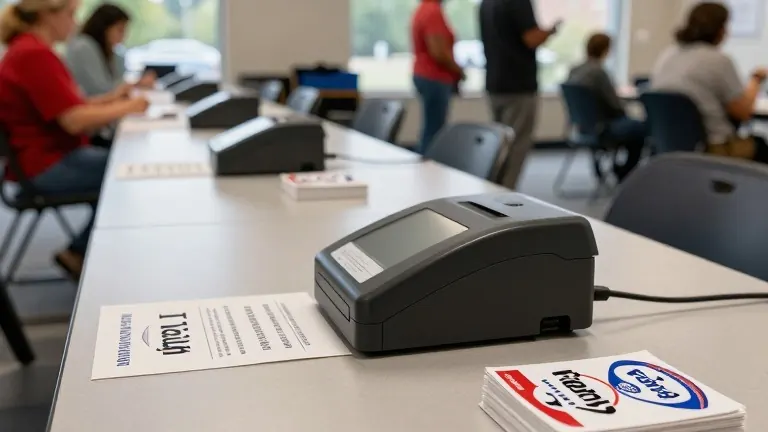
North Carolina’s 2026 midterm election cycle concluded its early voting phase on Saturday, October 31, with a turnout that state election officials described as a record high. The state’s election data indicates that 2,816,821 individuals cast their ballots during the 17-day window. This figure represents 35.7% of all registered voters in the state, a substantial increase from the 29.0% turnout recorded during the same period four years ago.
The surge in participation was not evenly distributed across the political spectrum. State data shows that registered Democrats and unaffiliated voters together accounted for nearly three-quarters of all early ballots. Unaffiliated voters represented 35% of the total, up from 30% in 2022. Registered Democrats maintained their share of the vote at 38%, while registered Republicans saw their share decline by five percentage points to 26%. This shift indicates a growing influence from voters who do not align with the two major parties in the state’s electoral process.
Geographically, the increase in early voting was widespread. Turnout exceeded the 2022 levels in 97 of the state’s 100 counties. Wake County recorded the highest volume with more than 300,000 ballots, followed closely by Mecklenburg County with 275,954. Demographically, the data reveals accelerated participation among minority groups and younger voters. Asian voters nearly doubled their ballot count compared to 2022. According to the North Carolina FreeEnterprise Foundation, voters categorized as “all other races” cast ballots at 2.3 times the 2022 rate. Black voters increased their participation by 1.5 times, reaching nearly 600,000 ballots.
Age data shows a similar trend among younger demographics. Ballots from voters aged 18 to 25 nearly doubled, surpassing the 200,000 mark. The 26 to 40 age group saw a 50% increase in turnout, resulting in more than 417,000 ballots. Despite these gains, older voters remain the majority of the electorate. Those aged 41 to 65 cast 1.12 million ballots, while those 66 and older cast 1.07 million. Together, these two groups comprised more than three-quarters of all early votes. Women continued to lead in participation, casting nearly 1.5 million ballots, or 53% of the total, compared to 1.15 million, or 41%, from men.
The shift in voting methods also reflects changing voter behavior. In-person early voting surged past 2.7 million ballots, while mail-in turnout dropped compared to 2022. Voters who prefer to cast their ballots in person have one final opportunity to do so on Election Day, Tuesday, November 3. Polls will open statewide at 6:30 a.m. and close at 7:30 p.m. Voters must travel to their assigned polling place based on their registered home address. While North Carolina requires voters to present photo identification to check in, those without acceptable ID may still vote by filling out an ID Exception Form.
The November 3 ballot includes a special election for a vacant U.S. Senate seat, three statewide referendums, and numerous local contests. The Senate race features former Governor Roy Cooper, a Democrat, against former RNC Chairman Michael Whatley, a Republican. Cooper has led in most polls, while Whatley has campaigned on supporting the agenda of President Donald Trump. Voters will also decide on three constitutional amendments. One proposal requires photo ID for all voters, not just those voting in person. Another aims to cap the state income tax rate at 3.5%. The third requires limits on property tax increases by local governments.
Source: WBTV