Arnab cuts power on India's coast
The storm forced 180,000 evacuations in Andhra Pradesh and triggered a temporary halt to trekking permits in Nepal.
By Ricardo Kovalenko ·
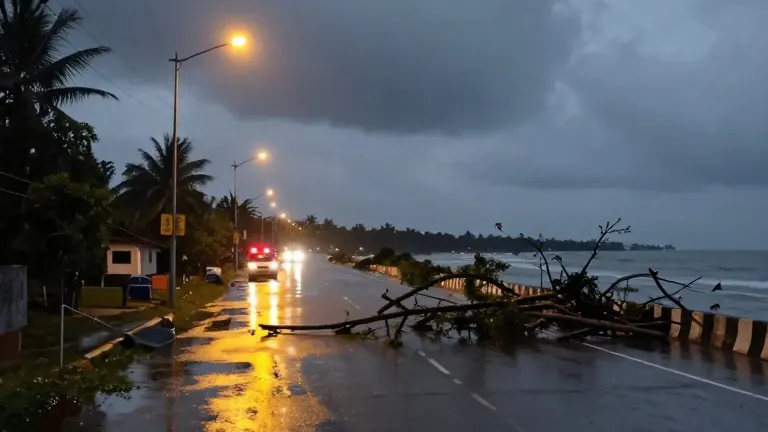
Cyclone Arnab made landfall on the Indian eastern coast early Wednesday morning, bringing wind speeds of 135 kilometers per hour. The storm cut electricity supplies and blocked highways with fallen trees in Andhra Pradesh. Officials reported no casualties at the time of the initial impact.
The system moved inland on Tuesday, prompting the evacuation of 180,000 residents from Andhra Pradesh and Odisha. More than 12 million people live in the regions along the storm's projected path. Travel networks faced widespread disruptions as airlines and rail operators cancelled services. Several schools closed their doors to students.
India's Meteorological Department initially classified the system as a very severe cyclonic storm. This is the third-highest rating on the national scale. The agency later downgraded the status to severe as the cyclone traveled farther inland. The transition brought strong winds and heavy rain to the coastal areas.
Flooding risks emerged in Kakinada district, where water spread across residential areas. One resident noted that no one knew which homes would be submerged next. The department forecast a storm surge reaching 1.5 meters above tide level. This condition threatened low-lying zones where the cyclone crossed the shoreline on Wednesday.
Alerts extended to Nepal, where authorities advised tourists to avoid high-altitude areas. The warning cited concerns over torrential rain, snowstorms, and avalanches between Thursday and Saturday. Nepal’s government suspended the issuance of trekking permits for three days. The halt occurred during the peak hiking season, when approximately 750 hikers typically receive permits daily.
The suspension comes while Nepal recovers from a glacial collapse in August. That disaster killed more than 1,400 people and left at least 5,000 missing. Sri Lanka also closed schools due to the storm. Its meteorology department warned that Arnab could cause flash floods and landslides in the region.
Source: Al Jazeera
More Business · World news · Business Complaints · Report a business · Got a Story?