Recursive's Flint Model: A 40-Billion Parameter Leap in AI Coding
A startup with a small team leveraged an automated system to create a high-performing open-weight coding model, sparking debate over the safety and feasibility of recursive self-improvement.
By Leila Saeed ·
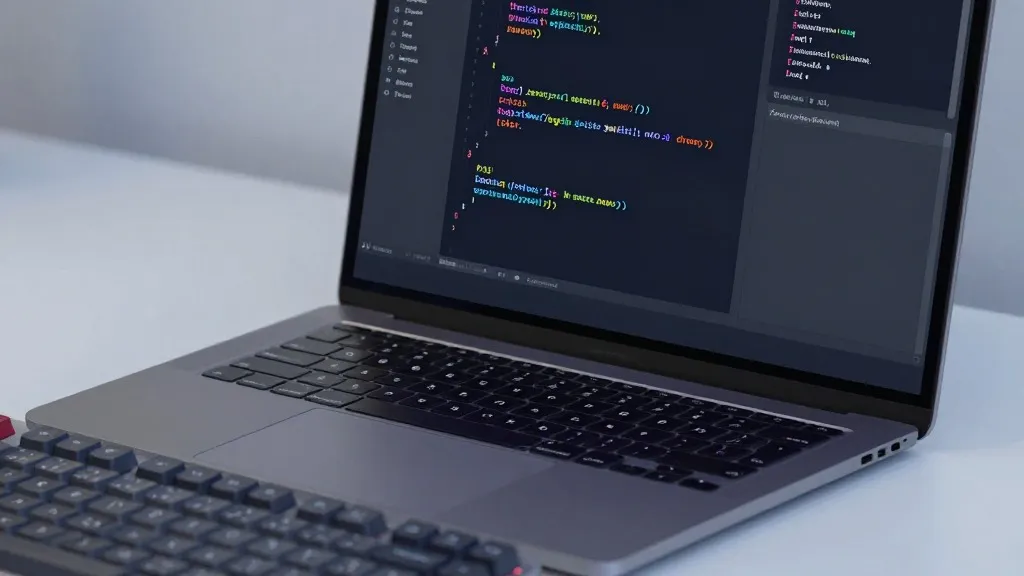
The Flint model operates with a precise count of 40 billion parameters. This specific size makes it distinct from the massive systems currently dominating the market, which often require industrial server racks to run. In contrast, Flint is designed to function on consumer hardware. The model was recently tested on a standard Mac equipped with 48 GB of RAM. This setup is considered modest by industry standards but proved sufficient to run the new software without significant lag or failure.
Flint is the first product from a company named Recursive. The firm is built around a concept known as recursive self-improvement. This approach involves using artificial intelligence to build and refine other AI systems. The goal is to create a loop where the technology improves its own development pipeline. According to Richard Socher, the CEO and cofounder of Recursive, nearly every part of the model's creation process was handled by AI. Socher explained that this automation allowed a small group of researchers to produce a competitive model in a matter of months.
The internal system used for this process is called the Eureka Machine. It reportedly developed new training methods, architectural designs, and code optimized for specific computer chips. Recursive shared data indicating that Flint performs better than other models of similar size on coding tasks. For a tech-savvy reader, this means the tool can write functional software with high accuracy. In testing, the model successfully created a command line to-do list and a website explaining the technology. It also built a program to search for research on recursive self-improvement. Users noted that the model was fast and did not make the common errors seen in other tools of its size.
The concept of letting AI improve itself has divided the scientific community. Some experts worry that an indefinite loop of improvement could lead to a system that escapes human control. This fear gained traction in September when a researcher from Anthropic warned that such advances could lead to human extinction within a few years. The concern is serious enough that several bills in Congress propose banning recursive self-improvement. Recursive, however, views these fears as overly dramatic. The company argues that legislation to stop the process is an unnecessary barrier to progress. Socher stated that the system used to build Flint cannot escape human oversight. He noted that humans can stop the process at any time if it goes wrong.
Recursive has secured significant funding to support this work. The company raised $650 million at a valuation of $4.65 billion. Investors include Google Ventures, Greycroft, Nvidia, and AMD Ventures. Socher previously worked as the chief scientist at Salesforce. His cofounders include Jeff Clune, a professor at the University of British Columbia. Clune researches methods for building AI systems that can learn indefinitely. The team believes their approach can make advanced AI more accessible to smaller organizations.
It remains unclear how far other American labs have progressed with similar techniques. However, recent work from Microsoft, Carnegie Mellon University, and the University of Virginia suggests that fully recursive systems are already possible. These researchers showed how an AI agent can modify its own software and weights to improve. While the risks of building a godlike intelligence are real, the current application of this technology appears promising. For now, it offers a practical way to enhance AI models without requiring massive teams or resources.
Socher believes this method will benefit many people by lowering the barrier to entry for high-quality AI. He described the process as a way for small teams to produce models that outperform others in their class. The technology represents a shift in how software is built. Instead of relying solely on human intuition, developers are beginning to trust the iterative power of automated systems. As these tools become more reliable, the pace of innovation in the tech sector may accelerate significantly.
Source: Wired · original report published