Federal Regulators Move to Standardize Blue-Green Lighting for Autonomous Vehicles
A proposed federal rule would assign a specific cyan-colored lamp to signal that a vehicle is operating under automated control.
By Leila Saeed ·
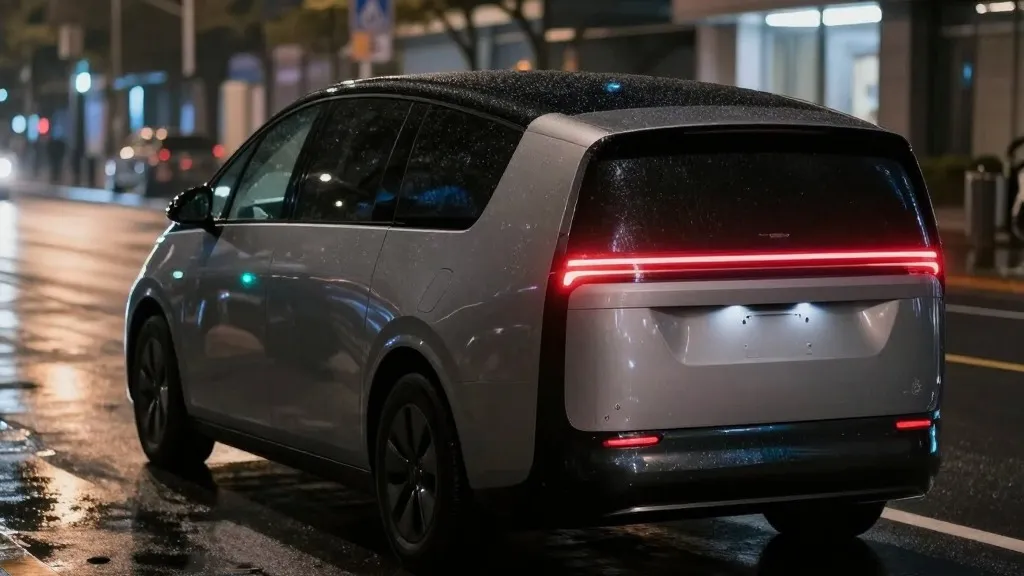
Federal regulators are seeking to mandate a specific visual signal for vehicles operating without a human at the wheel: a cyan-colored light. This proposal from the National Highway Traffic Safety Administration (NHTSA) is intended to create a uniform method for signaling that an automated driving system is in control, providing a clear indicator for law enforcement and other road users.
The proposed changes would amend Federal Motor Vehicle Safety Standard (FMVSS) No. 108, the existing regulation governing vehicle lighting. The agency’s aim is twofold: to streamline regulations that are unnecessary for vehicles without human drivers and to standardize the way autonomous vehicles communicate their operational status to the public. This effort is part of a broader push from the Department of Transportation to ease the deployment of autonomous vehicles by removing requirements tied to traditional human-operated controls, such as steering wheels and pedals.
The choice of cyan is deliberate, intended to occupy a visual space not already claimed by other signals on the road. Red, amber, white, and flashing blue/red lights are already assigned to functions like braking, turn signals, headlights, and emergency vehicles. The agency believes cyan can clearly signal automated operation without causing confusion. There is also a precedent for such a feature; Mercedes-Benz previously received state-level approval for turquoise lights on its Level 3 Drive Pilot cars, though the company has since discontinued that system in favor of a Level 2++ setup.
Under the proposed rule, the installation of these blue-green marker lamps would be optional for manufacturers. However, by establishing official federal standards for their color, brightness, and location, NHTSA aims to ensure that any automaker or robotaxi operator choosing to implement them uses a consistent and legally compliant setup. This would provide a uniform standard for companies like Waymo, Nuro, Zoox, GM, and Mercedes. The proposal also seeks to eliminate lighting requirements that are illogical for a vehicle without a driver, such as mandates for physical hazard switches and manual beam shifters, and to update testing standards to accommodate modern LED lighting architectures.
This regulatory action occurs alongside existing enforcement actions concerning vehicle certification. In September, NHTSA opened an audit query into the Tesla Cybercab to examine the process and technical data Tesla used to certify the vehicle. The inquiry involves the absence of design features currently required under FMVSS, including sideview mirrors, pedals, and a steering wheel.
The proposed modifications to FMVSS No. 108 are now open for public comment. Regulators will review the feedback received before finalizing the rules that would govern the lighting and design of future autonomous vehicles.
Source: The Verge · original report published