
816 Acres: The Forest Loss That Pushed Wolves Into Finnish Villages
Unauthorized clearing for AI infrastructure has displaced wildlife, forcing predators into residential areas and drawing regulatory scrutiny.
By Leila Saeed ·
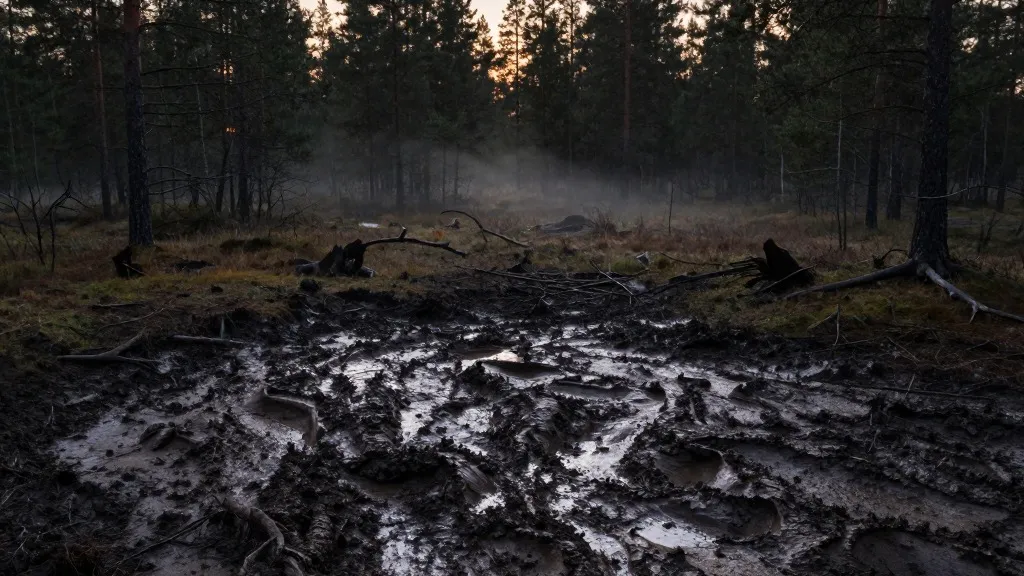
Residents in the Finnish villages surrounding the Muhos and Otanmäki regions are now facing a direct, physical consequence of the rapid expansion of artificial intelligence infrastructure: wolves are roaming freely into their communities. This shift in local wildlife behavior is not incidental; it is a direct result of the displacement of established animal populations from their natural habitats. For families living in these rural areas, the arrival of large predators near homes represents a tangible change in daily safety and routine, moving the debate from abstract environmental concerns to immediate, lived reality.
The catalyst for this disruption is the unauthorized clearing of approximately 1,300 acres of forest by Google, the American search and AI giant. Specifically, 816 acres of woodland near Muhos have been transformed into an expanse of mud, while roughly 500 acres of forest near Otanmäki, located 55 miles southeast of the village, have also been cleared. The Finnish Licensing and Supervision Authority (LVV) has issued an order for Google to cease work in these areas, citing a lack of proper authorization for the scale of the environmental impact. The company’s country manager has publicly apologized for the unauthorized clearings, acknowledging the significant alteration of the landscape.
The primary complaint from locals is no longer just about the loss of trees, but about the vacuum left in the ecosystem. Anni Ranta, a 53-year-old resident whose family has lived in Otanmäki for generations, explained that wild animals, including wolves, have moved out of the forest and into the village because their natural environment was destroyed. "We had wolves coming into the village because all the wild animals moved out of the forest," Ranta stated. Her account highlights a growing human safety concern, as the displaced wildlife seeks new territory in the absence of their former home.
Beyond the immediate wildlife issue, the project has drawn sharp criticism for seemingly bypassing standard regulations in a hurry to build new AI data centers. A representative for the Finnish Association for Nature Conservation (SLL) described Google’s flouting of environmental policy as "unprecedented and clear." This assessment aligns with the actions of the LVV, which has taken a firm regulatory stance. The tension suggests that the speed of AI expansion is outpacing the local regulatory frameworks designed to protect natural resources, leading to a situation where developers act first and address compliance later.
Local discontent extends beyond the presence of wolves. Residents have reported a variety of other unwanted side effects associated with the construction and operation of the sites. These include persistent construction and factory noise, streams turning brown due to runoff, and the displacement of rare bird species. These grievances indicate that the impact of the data centers is multifaceted, affecting not just the forest floor but the air, water, and soundscape of the surrounding countryside. The accumulation of these issues is fueling a simmering anger among the community that goes beyond typical developer-resident friction.
Google’s response has been notably optimistic, even in the face of regulatory orders to stop work. A company spokesperson stated, "We will fully comply with LVV’s requests in this matter," and expressed a desire to maintain an "active, open dialogue" with authorities to strengthen the partnership with Finland. This upbeat tone contrasts with the skepticism of local conservation groups and residents who feel the environmental damage has already been done. The company appears to be banking on the long-term business benefits of the data centers to sway regulators and the government, hoping that economic gains will outweigh the current ecological costs.
The situation in Finland mirrors a broader pattern seen globally, where AI data center developers have faced complaints about environmental impacts. This is far from the first instance where the drive to build massive computing facilities has clashed with local ecosystems. In the United States and other countries, similar concerns have been raised regarding the resource intensity of these projects. The Finland case, however, is distinct in its regulatory outcome, with the LVV explicitly ordering a halt to development in Muhos and Kajaani, a region near Otanmäki, after giving notice earlier this month.
Ranta also voiced a geopolitical concern, suggesting that the U.S.-owned data centers might make Finland a more attractive target for Russian aggression. While this is a secondary fear compared to the immediate wildlife issues, it adds a layer of strategic anxiety to the local debate. The combination of environmental disruption, regulatory friction, and geopolitical speculation creates a complex backdrop for Google’s operations in the region.
The story of the wolves roaming into villages serves as a stark, visible symbol of the hidden costs of the AI boom. While the technology promises global benefits, the local costs are being borne by communities whose landscapes are being reshaped by the needs of servers. As the mud spreads across where the forest once stood, the question for regulators and developers is whether the speed of deployment can be justified by the long-term stability of the communities it displaces.
For now, the work has stopped, and the animals have moved in. The resolution of this conflict will likely depend on whether Google’s promised dialogue leads to concrete remediation or if the economic arguments for the data centers prevail. Until then, the residents of Muhos and Otanmäki must adjust to a new normal, one where the boundary between the wild and the residential is blurred by the demands of artificial intelligence.
Source: Tom's Hardware · original report published