Saudi, Turkish, and Pakistani Chiefs Meet Iran to Stop Fighting and Calm the Region
Security leaders from Saudi Arabia, Turkey, and Pakistan arrived in Iran Monday to negotiate a deal that could prevent new fighting with Washington and Israel.
By David Mokoena ·
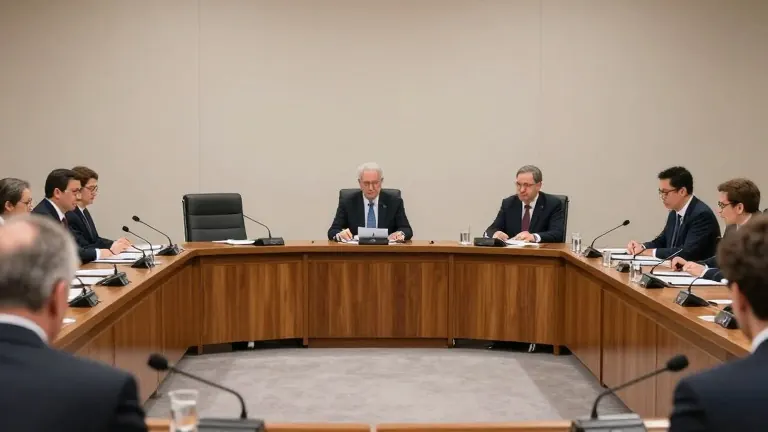
Diplomats and military leaders from Saudi Arabia, Turkey, and Pakistan arrived in Tehran on Monday to negotiate a framework that might prevent renewed combat between Iran and the United States. The visit occurs as rhetoric intensifies and the Pentagon reports a major military buildup in the region ahead of the US midterm elections.
The delegation includes Khalid bin Salman, Saudi Arabia's defence minister, Field Marshal Asim Munir, Pakistan's army chief, and Ibrahim Kalın, the head of Turkish intelligence. They are meeting with Iran's senior security officials to discuss terms for a truce and to address Iran's role in a potential new security pact among Islamic nations.
A primary objective of the talks is to persuade Iran to instruct the Houthis in Yemen to cease missile and drone attacks on Saudi infrastructure. The Houthis recently claimed responsibility for closing Riyadh airport and causing substantial economic damage to Saudi Arabia. The three visiting nations signed a defence agreement in Mecca in August, a move some in Iran initially viewed as a challenge to Tehran, though the signatories have described it as a mutual defence arrangement.
Esmaeil Baghaei, a spokesperson for the Iranian foreign ministry, stated that the meeting could establish a foundation for regional cooperation based on shared interests. He noted that the past two years, particularly the last eight months, demonstrated that stable security in the region depends on trust and collaboration among local countries.
Javad Zarif, a former foreign minister and advocate for a regional alliance, called for a comprehensive network based on non-aggression and mutual trust. He argued that regional security must be created by the people of the region rather than imported. Zarif published his remarks alongside verses from the Qur'an that emphasize unity and the avoidance of division.
The negotiations take place while Qatari mediators worked in Tehran on Sunday to secure terms for Iran to reopen the Strait of Hormuz. Israeli media reports indicate that Prime Minister Benjamin Netanyahu is pressing his military to provoke a conflict with Iran before Israeli elections are held on Tuesday. These developments contrast with the goal of the current talks, which aim to reduce the perception that the US and Israel are long-term sources of insecurity in the Gulf.
Iran's hardliners continue to argue that assembling a nuclear bomb is the best guarantee of the country's security. A formal pact could take months to negotiate, raising questions about whether such an agreement can satisfy Washington's immediate demand that Iran reopen the Strait of Hormuz before US sanctions are lifted.
Source: The Guardian