Tom Phillips Documentary Review: Police acknowledge delay
New Zealand Police admit their four-week timeline for reviewing the Tom Phillips documentary was ambitious, expecting the final report before the end of 2026.
By Ricardo Kovalenko ·
The disappearance of fugitive Tom Phillips and his three children from Marokopa in December 2021 led to a prolonged manhunt in the Waikato bush. His death in a shootout with police in September 2025 concluded the active investigation, but questions remain about how the case was documented. New Zealand Police have stated that a review of their relationship with a documentary production covering the hunt will be completed before the end of the year.
The investigation into the documentary was triggered after police released more than 600 pages of correspondence under the Official Information Act. These documents revealed that NHNZ Productions, a Dunedin-based film crew, had followed the investigation for over a year. The documentary, produced by Dame Julie Christie for Netflix, gained exclusive access to police operations. Police executive director of media and communications Cas Carter said the force is reviewing how it managed engagement with the production and mainstream media.
Detective Inspector Shaun Vickers is leading the review, supported by independent media expert Gavin Ellis. The terms of reference direct the team to examine police decision-making, governance, and risk management. Specific questions include how the relationship with the crew was governed and how police balanced investigative integrity against public confidence. Vickers is reported to have a record in leading high-profile investigations that attract media interest.
Internal emails released in April show that Claire Trevett, the chief media and communications advisor to the Police Commissioner, raised concerns about the project. In an email dated March 13, 2025, she noted the scale of access granted to the crew, including briefings and advance notice. She argued that a review was warranted because the documentary involved an active and complicated investigation, making it more sensitive than standard police footage. Police Commissioner’s office agreed to the review after Trevett flagged potential risks.
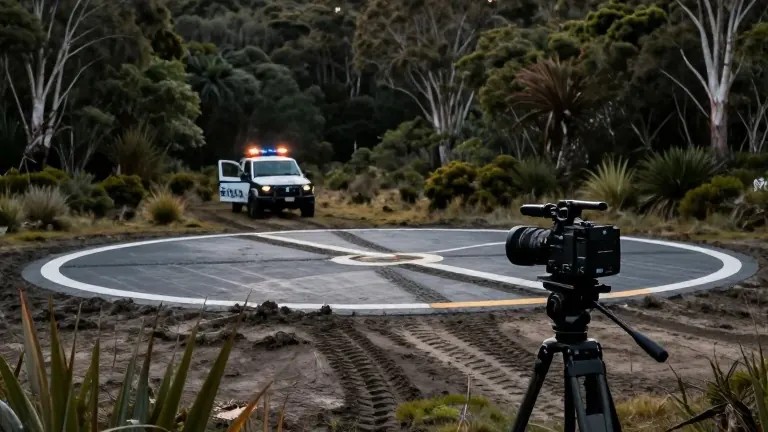
The released documents also detail logistical interactions between the production and police. One email mentioned a camera operator joining a scheduled Eagle helicopter flight to Marokopa on March 12, 2025. While a police spokesperson later clarified that the crew was not given a special ride, they acknowledged the operator joined a pre-planned fly-over to support the documentary. Christie also shared behind-the-scenes photos with Juli Clausen, the police media director, who thanked her and noted plans to dismantle equipment before lifting cordons to avoid a media tourist destination.
A police spokesperson told RNZ that the four-week timeframe for the review was ambitious. The delay occurred because the initial list of interviewees expanded and some staff were on leave. The force expects to release a public summary outlining the scope, high-level findings, and resulting actions before 2026 ends. Police have not approved any further filming requests, though the production team has indicated a need for final interviews and a specific scene involving officer Andy Saunders.
The review will assess whether current protocols are sufficient for documentaries of this type. It will examine how contractual terms shaped police communications and how operational access was decided. The final report will be briefed to the chief of staff and the commissioner, with any matters requiring escalation identified. The process aims to establish principles for balancing staff safety, media fairness, and public confidence in future live investigations.
Source: The Star